
The Lifesaving Pulse: How Molybdenum-99 is Formed and Harvested
Molybdenum-99 (Mo-99) is the invisible backbone of modern diagnostic medicine. While the name might not be a household word, the «daughter» isotope it produces—Technetium-99m—is used in approximately https://www.99formed.com/ 30 million medical procedures annually worldwide. From detecting heart disease to mapping cancer in bones, this isotope provides critical insights that would otherwise require invasive surgery. Because Mo-99 does not occur naturally, it must be «manufactured» through complex nuclear processes.
The Core Process: Neutron-Induced Fission
The primary method for producing medical-grade Mo-99 is the neutron-induced fission of Uranium-235 (U-235).
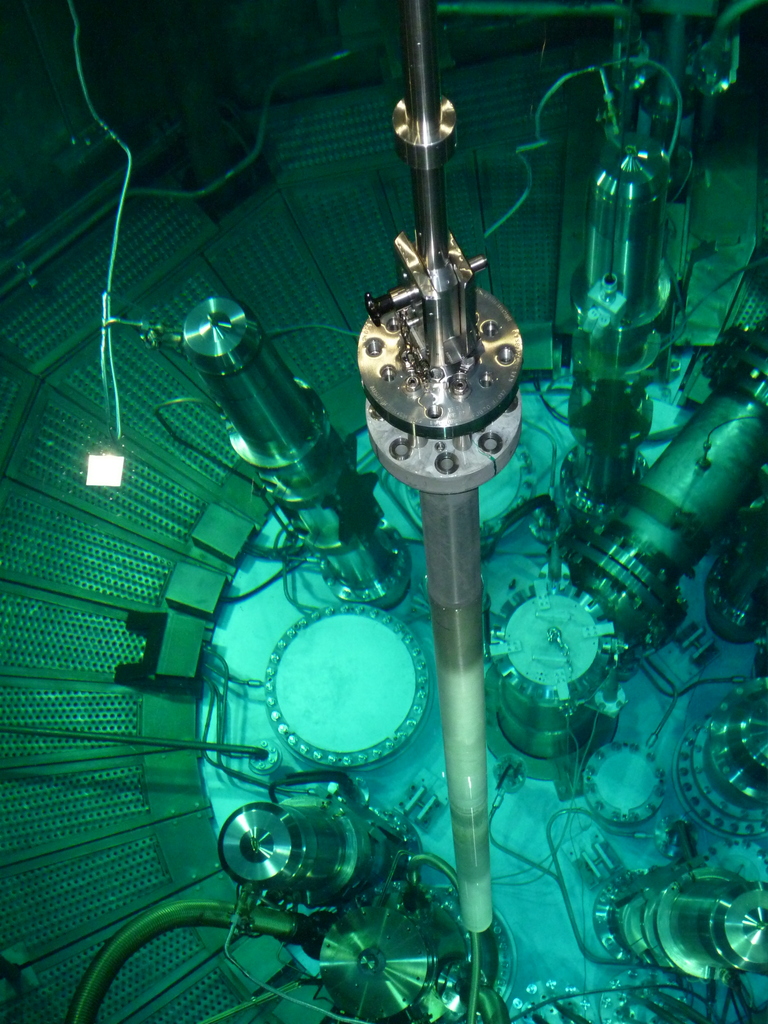
- Target Irradiation: Producers place targets—typically aluminum plates or pins containing uranium—into a high-flux research reactor.
- The Fission Event: Inside the reactor, these targets are bombarded with thermal neutrons. When a U-235 nucleus absorbs a neutron, it becomes unstable and splits (fissions) into smaller fragments.
- The 6% Yield: Approximately 6.1% of these fission fragments are Mo-99 atoms.
This «gold standard» method is highly efficient, creating Mo-99 with high specific activity, which is essential for the compact generators used in hospitals.
From Reactor to Hospital: The Rapid Race
Mo-99 is a race against time. It has a half-life of only 66 hours, meaning it loses half of its radioactivity every 2.75 days.
- Extraction: After 5 to 7 days of irradiation, targets are moved to heavily shielded «hot cells». Here, they are dissolved in acid or alkaline solutions to chemically separate the molybdenum from other fission byproducts like Iodine-131 or Xenon-133.
- Purification: The recovered Mo-99 is purified and adsorbed onto alumina columns inside lead-shielded containers known as Technetium-99m generators.
- Decay and «Milking»: Once at the hospital, the Mo-99 inside the generator slowly decays into Technetium-99m (6-hour half-life). Doctors «elute» or «milk» the generator with a saline wash to collect the Technetium-99m for patient injections.
Future Frontiers: Cleaner Alternatives
While traditional reactors still provide most of the world’s supply, new «smart» technologies are emerging to improve safety and sustainability:
- LEU Conversion: Global efforts are shifting from Highly Enriched Uranium (HEU) to Low Enriched Uranium (LEU) to reduce nuclear proliferation risks.
- Neutron Activation: Some facilities, like those in Japan, use neutron capture, where stable Mo-98 absorbs a neutron to become Mo-99, avoiding uranium altogether.
- Accelerator Innovation: Companies like SHINE Technologies are pioneering fusion-based processes that generate neutrons to produce Mo-99 without a conventional nuclear reactor.
Would you like to explore the specific medical procedures where Technetium-99m is most critical or the global locations of the remaining major reactors?